


Thomas Zemen
Principal Scientist
Thomas Zemen received the Dipl.-Ing. degree, the doctoral degree and the Venia Docendi (Habilitation) from Technische Universität Wien (TU Wien).
He joined AIT Austrian Institute of Technology in 2014 and is Principal Scientist since 2021. Previously, Thomas Zemen worked for Siemens AG Austria and the Telecommunication Research Center Vienna (FTW).
Mr. Zemen is the author or coauthor of four books chapters, 37 journal papers, more than 115 conference communications, and two patents. His research interests focus on the interaction of the physical radio communication channel with other parts of a wireless communication system for time-sensitive 5G and 6G applications.
Dr. Zemen is docent at the Vienna University of Technology and served as Editor for the IEEE Transactions on Wireless Communications from 2011 – 2017.
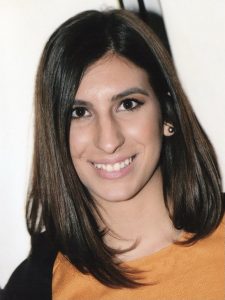
Anja Dakić
Scientist
Anja Dakić graduated from the School of Electrical Engineering of University of Belgrade, Telecommunications and Information in 2017, and received the master’s degree in 2019 and the doctoral degree from TU Vienna in 2025. Since 2019 she is a Ph.D. candidate with the Austrian Institute of Technology in the group of Thomas Zemen. She is a member of the Reliable Wireless Communication Team of the AIT since 2018. Special areas of research include wireless mobile communication for vehicles, modeling vehicular channels, measurements with hardware modems and system-level simulations of communications systems.
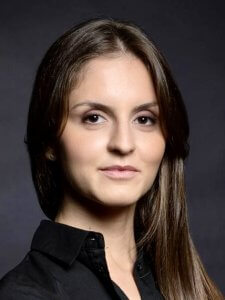
Milica Djordjevic
Junior Scientist
Milica Djordjevic received the B.Sc. degree in Telecommunications Engineering from the University of Belgrade, Serbia, in 2023, and the M.Sc. degree in 2024. After working for Rohde & Schwarz, she joined the AIT Austrian Institute of Technology as a Junior Scientist in the Wireless Communications Research Group led by Thomas Zemen. Since 2025, she has been pursuing the Ph.D. degree at the Vienna University of Technology (TU Wien). Her research focuses on signal propagation and site-specific radio channel modeling, including ray tracing and geometry-based stochastic approaches, as well as extra-large MIMO (XL-MIMO) systems and channel characterization for ultra-reliable low-latency communications.
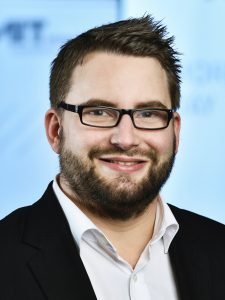
Dr. Markus Hofer
scientist
Markus Hofer received the Dipl.-Ing. degree and the doctoral degree from Technische Universität Wien (TU Wien).
He joined the AIT Austrian Institute of Technology in 2015. Previously Markus Hofer worked for the Telecommunication Research Center Vienna (FTW).
His research interests include ultra reliable low-latency wireless communications, time-variant channel measurements, modelling and real-time emulation, mmWave communications, time-variant channel estimation, massive MIMO systems, reflective intelligent surfaces, software-defined radio rapid prototyping and cooperative communication systems.
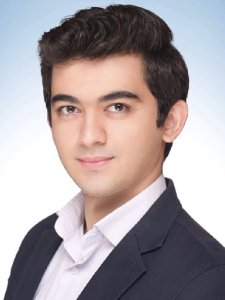
HAMED RADPOUR
Junior Scientist
Hamed Radpour graduated from the Faculty of Electrical Engineering of University of Tabriz, Telecommunications Engineering in 2019, and received his master’s degree from Korea Advanced Institute of Science & Technology (KAIST) in 2022. Since 2022 he is a Ph.D. candidate with the AIT Austrian Institute of Technology, working in the reliable wireless communications research group of Thomas Zemen. His research interests include reconfigurable intelligent surfaces (RIS) for 6G communication systems, massive MIMO systems, channel modelling and measurement for ultra-reliable low-latency wireless communications.
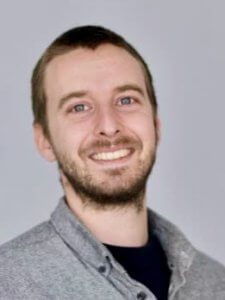
Cedric Soliveri
Scientist
Cédric Soliveri received the B.Sc. degree in Electronics and the M.Sc. degree in Telecommunications from the Université Côte d’Azur, Nice, France, in 2021 and 2023, respectively. In 2023, he joined the AIT Austrian Institute of Technology as a Junior Scientist in the Wireless Communications Research Group led by Thomas Zemen, where he also began pursuing the Ph.D. degree at the Vienna University of Technology (TU Wien). His research focuses on FPGA-based channel prediction, distributed MIMO, and digital beamforming for UAV communication links and 6G testbeds.
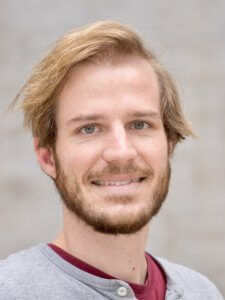
Thomas Wilding
Scientist
Thomas Wilding received a master’s degree in Electrical Engineering and Audio Engineering from the University of Music and Performing Arts Graz and Graz University of Technology, Austria in 2016. He obtained a PhD in the field of wireless communication from Graz University of Technology in 2022 and has been a post-doctoral researcher there working on wireless communication for 6G future systems until 2025. He joined AIT Austrian Institute of Technology in 2025 and is a member of the wireless communication research group of Thomas Zemen. His research interests include propagation modelling for communication systems and algorithm development for radio-based positioning and sensing exploiting site-specific effects.
ALUMNI
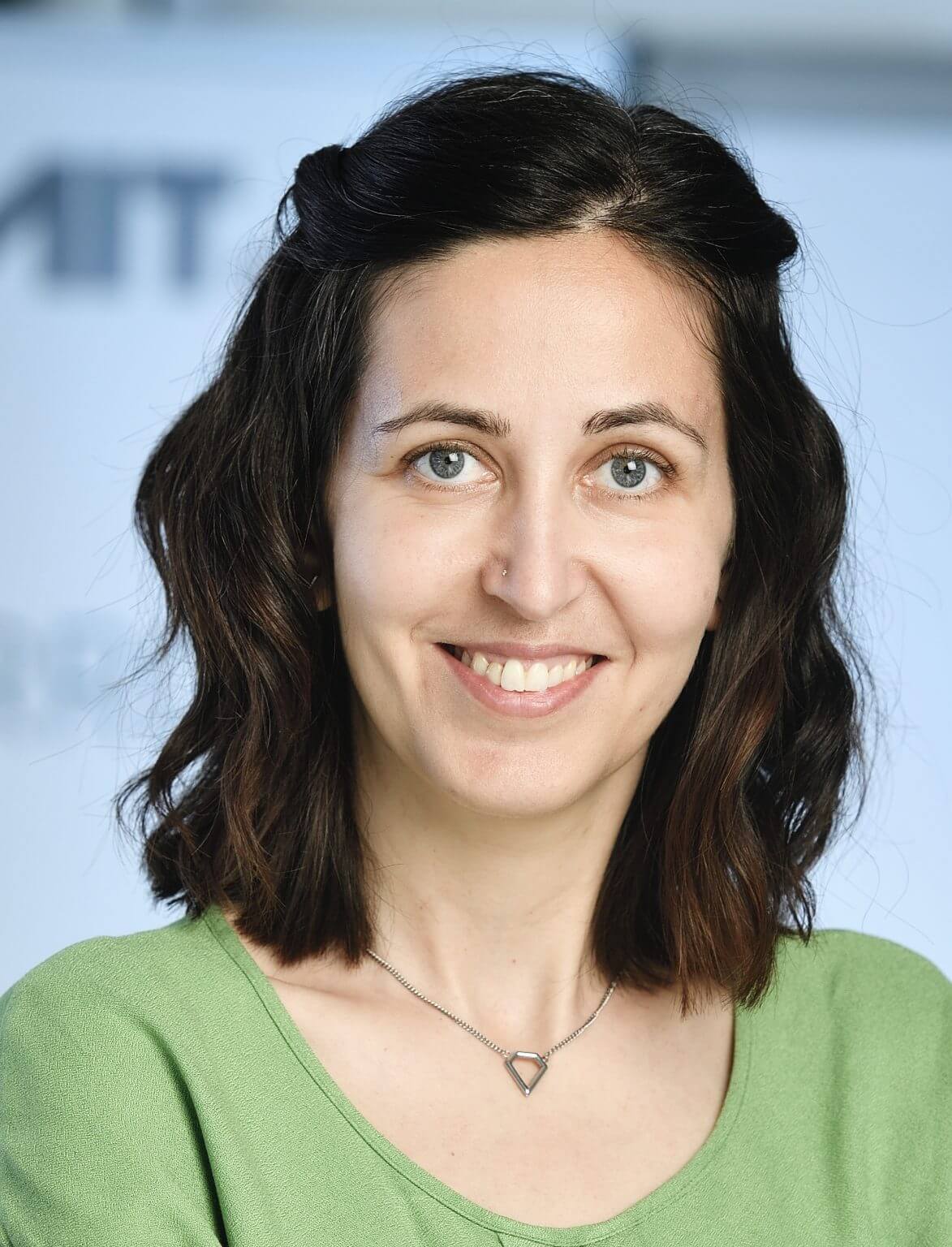
Laura Bernadó
Scientist
DI Dr. techn. Laura Bernadó obtained her PhD in telecommunications engineering from the Vienna University of Technology (VUT) in 2012 and the M.Sc. degree in telecommunications engineering from the Technical University of Catalonia (UPC) in 2007, with the Master Thesis written at the Royal Institute of Technology (KTH), in Stockholm. Mrs. Bernadó has worked as a researcher in the signal and information processing department at the Telecommunications Research Center in Vienna, Austria, for 6 years, and as an antenna engineer at Fractus SA, Spain, for 3 years. Currently she works as scientist at the department for digital safety and security at AIT Austrian Institute of Technology.
Katharina Buczolich
Technician
Katharina Buczolich is a master student at the Austrian Institute of Technology. In 2020 Ms. Buczolich received her bachelor’s degree in physics at the TU Wien, Austria. Since 2020 she has been a member of the Wireless Team at AIT and was involved in several national and international research projects. Special areas of research include massive MIMO and quantum radio frequency sensing for future 6G systems. She is currently writing her master thesis project work on “Optimised antenna structures for NV-center based quantum radio signal detection”

David Löeschenbrand
Junior Scientist
Dipl.-Ing. David Löschenbrand received the Dipl.-Ing. degree (with distinction) in Telecommunications in 2016 from Vienna University of Technology. From 2012 to 2015, he worked for the Institute of Telecommunications, implementing software for antenna characterization purposes. Since 2016, he is a Ph.D. candidate with the Austrian Institute of Technology in the group of Thomas Zemen. His research interests focus on massive MIMO in time-varying propagation channels, channel aging, antenna design, reliable low-latency wireless communications for highly autonomous vehicles, vehicular channel measurements and channel modelling. He gained experience in research work and project management during several finished and ongoing applied research projects on a national and international scale. He successfully implemented a software defined radio based massive MIMO testbed for highspeed measurements and signal processing experimentation, which provides crucial insights for several of AIT’s projects.
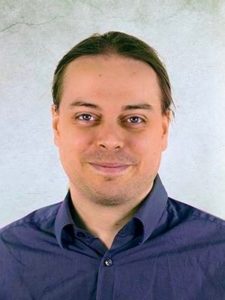
DI Dr. Benjamin Rainer
scientist
DI Dr. Benjamin Rainer is a researcher in AIT’s Center for Digital Safety & Security. He received the M.Sc. (Dipl.-Ing.), and Ph.D. (Dr. techn.) in computer science all with distinction from the Alpen-Adria-University Klagenfurt. From 2012 to 2016 he has been with the Alpen-Adria-University Klagenfurt as a Researcher and Postdoc at the institute of Information Technology. He has been with the Austrian Institute of Technology, Vienna since 2017.

DI Stefan Zelenbaba
junior scientist
Stefan Zelenbaba graduated from the Faculty of Electrical Engineering of University of Belgrade, Telecommunications Engineering in 2015, and received his master’s degree in collaboration with Nokia Bell Labs in 2017. His research is focused on measurements and characterization of non-stationary time-variant wireless channels and geometry-based wireless channel modeling. Stefan Zelenbaba obtained his doctoral degree in 2022 from TU Wien for his thesis “Digital twin for reliable wireless communications“.